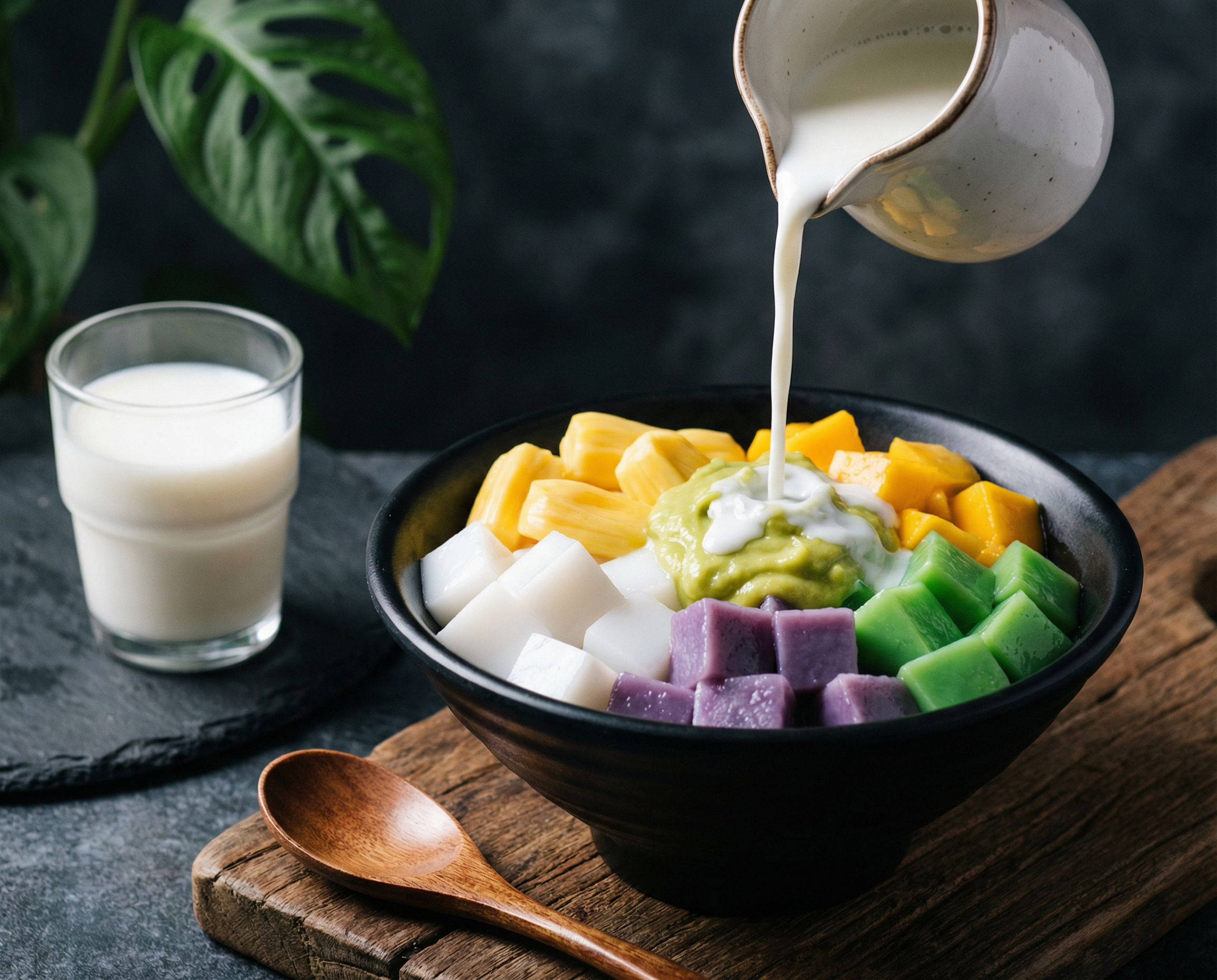
Cold desserts are the sweet backbone of any Da Nang visit. In the city's humid heat, something cold and flavourful is less a luxury and more a necessity. Two contenders dominate the conversation: chè, Vietnam's ancient category of sweet soups and puddings, and gelato, the Italian ice cream tradition that has found an unlikely home in Central Vietnam. We tried both — extensively — and here's what we found.
What is Chè?
Chè (pronounced roughly like "cheh") is a broad Vietnamese term covering a huge family of sweet dessert soups, puddings, and drinks. The word can refer to anything from a simple warm mung bean soup to an elaborate layered construction of jellies, beans, fruit, and crushed ice. It has been made in Vietnam for centuries and remains one of the country's most beloved everyday foods — sold from street carts, market stalls, and dedicated shops across every city.
In Da Nang, the most common varieties you'll encounter include chè bà màu (three-colour chè, with layers of mung bean paste, red jelly, and pandan jelly topped with coconut milk), chè thái (a Thai-influenced version loaded with tropical fruit, nata de coco, and sweet syrup), and chè đậu xanh (a warming mung bean soup, often eaten warm in winter). The best place in Da Nang to try chè in all its forms is Chè Liên, a family institution that has been operating for decades and still draws queues every evening.
What is Gelato?
Gelato is the Italian cousin of ice cream — churned at a slower speed to incorporate less air, stored at a slightly warmer temperature to keep it dense and silky, and typically made with a higher ratio of milk to cream. The result is a more intensely flavoured, smoother product than most supermarket ice cream. Authentic gelato is a craft food, and the quality varies enormously depending on who is making it.
Crema Gelato brings a genuinely authentic approach to Da Nang. Using Italian technique and quality ingredients, their flavours — pistachio, stracciatella, seasonal fruit sorbets — hold up against what you'd find in a good gelateria in Rome or Bologna. For tourists from Europe or Australia, it offers a moment of comfortable familiarity in an unfamiliar city. For everyone else, it's simply excellent ice cream.
Head-to-Head Comparison
We scored both on the criteria that matter most to visitors. Here's how they stack up:
| Criteria | Chè — Chè Liên | Gelato — Crema |
|---|---|---|
| Taste | 9.0 | 9.0 |
| Value for money | 9.5 | 7.5 |
| Availability | 8.0 | 8.5 |
| Cultural experience | Essential | Good |
| Best for tourists | Very good | Excellent |
The Verdict
Here's the honest answer: both are excellent, and they offer fundamentally different experiences. Choosing between them is less about which is objectively better and more about what kind of visit you're on.
Choose chè if you want to eat the way Da Nang locals eat. Chè Liên in particular is a living piece of the city's culinary history — sitting on a plastic stool with a glass of three-colour chè for 20,000 VND, surrounded by Vietnamese families, is one of those travel experiences you simply can't replicate anywhere else. The value is extraordinary and the flavours are genuinely wonderful once you let yourself be surprised by the unfamiliar textures.
Choose gelato if you want something immediately approachable, high-quality, and easy to eat on the go. Crema Gelato's product is first-rate and the experience requires no cultural orientation. It's also the better post-swim, midday-heat option.
Our recommendation? Try both. They cost almost nothing relative to the experience they deliver. Have chè at Chè Liên one evening, gelato at Crema on a beach afternoon — and you'll have covered two of Da Nang's most rewarding dessert traditions in a single trip.